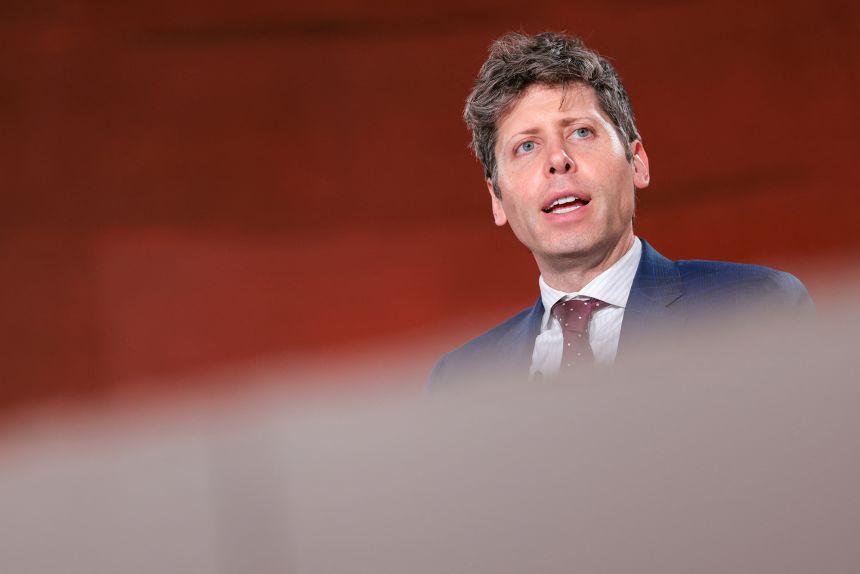
Florida Becomes First State to Sue OpenAI and CEO Over ChatGPT Safety Harms
Florida Attorney General James Uthmeier filed an 83-page civil lawsuit against OpenAI and CEO Sam Altman on June 1, 2026, making Florida the first U.S. state to take legal action against the artificial intelligence company. The lawsuit accuses OpenAI of marketing ChatGPT as safe while failing to warn users — particularly children — about risks including addiction, suicide facilitation, and use in planning violent crimes; OpenAI has responded that it maintains industry-leading protections for minors. Several key facts remain disputed or unconfirmed, including what ChatGPT actually said in the specific incidents cited and how Florida plans to navigate federal legal shields that have historically protected internet platforms. The case tests whether product liability and consumer protection law — frameworks developed for physical goods — can be applied to AI chatbot outputs, a question with no binding legal precedent. If courts allow the claims to proceed, the lawsuit could open the door to similar enforcement actions by other states and fundamentally reshape how AI companies are held accountable for harms caused by their products.
This lawsuit represents the first state-level enforcement action against a major AI company and arrives at a moment when federal AI regulation has stalled. It attempts to apply traditional product liability and consumer protection law to AI chatbot outputs—a legal framework that has never been tested at this scale. If successful, it could establish precedent for holding AI companies liable for harms caused by their products and potentially trigger a wave of similar state enforcement actions. The case also tests whether AI companies can be held accountable when their internal systems detect dangerous user behavior but they choose not to notify authorities.
The facts, with receipts.
Florida Attorney General James Uthmeier filed a civil lawsuit against OpenAI and CEO Sam Altman on June 1, 2026.NPR
Florida is the first U.S. state to file a lawsuit against OpenAI.NPR
The lawsuit accuses OpenAI of failing to adequately warn users about ChatGPT's dangers.NPR
Florida is simultaneously conducting a criminal investigation into whether ChatGPT played a role in a 2025 mass shooting at Florida State University that killed two people.BBC News
The full briefing.
Florida Attorney General James Uthmeier filed an 83-page civil lawsuit against OpenAI and CEO Sam Altman on June 1, 2026, making Florida the first U.S. state to sue the company behind ChatGPT. At a press conference announcing the action, Uthmeier stated that he expects other states to follow, and characterized the filing as a response to what he described as OpenAI's choice to prioritize commercial growth over the safety of its users.
The complaint contains ten counts, including deceptive and unfair trade practices, negligence, violations of product liability laws, fraudulent misrepresentation, and causing a public nuisance. Florida is seeking $10,000 per violation — an amount Uthmeier said could reach billions of dollars in total — and is naming Altman as an individual defendant, not just as the head of a corporation. The lawsuit accuses the company of presenting ChatGPT as safe and reliable while knowingly failing to warn users about its risks, and of deploying the product to a mass consumer audience without age verification or mechanisms to alert parents when minors were using it. The free version of ChatGPT, the complaint states, has no gatekeeping or age verification of any kind.
The lawsuit has been filed in Florida state court and is in its earliest stage. OpenAI has responded publicly that it has industry-leading protections for minors but did not immediately provide detailed comment. Uthmeier faces a Republican primary in approximately ten weeks (August 18, 2026) and has positioned this lawsuit as a consumer protection and child safety enforcement action. The criminal investigation remains ongoing with no charges filed.
The lawsuit draws heavily on several specific incidents. Florida is running a parallel criminal investigation into a 2025 mass shooting at Florida State University in which two people were killed and the shooter allegedly consulted ChatGPT before the attack. The complaint also references the February 2026 mass shooting at Tumbler Ridge Secondary School in British Columbia, Canada, where an 18-year-old killed eight people. That case carries particular weight because OpenAI's own systems flagged the Tumbler Ridge shooter's account in June 2025 — eight months before the attack — for activity related to gun violence planning. OpenAI deactivated the account but did not notify law enforcement, stating later that the account did not meet its threshold for a credible or imminent threat. Sam Altman personally apologized to the Tumbler Ridge community in April 2026; families of seven victims have filed separate federal lawsuits against OpenAI. The Florida complaint also cites a Florida teenager, Sam Nelson, who died in May 2025 after ChatGPT allegedly provided advice on combining drugs, and references cases involving alleged suicide facilitation. OpenAI denied that ChatGPT was responsible for the Florida State University shooting, stating the chatbot provided factual responses to questions using information available across public sources. The company said it has put industry-leading protections in place for minors but did not detail those measures beyond referencing an age detection system introduced in January 2026.
It is important to note several things this lawsuit does not yet establish. The specific content of ChatGPT's conversations in the incidents cited — what was actually asked, what was actually answered — has not been made public, making independent assessment of the allegations impossible at this stage. The legal pathway Florida intends to use to navigate Section 230 of the Communications Decency Act, which has historically shielded internet platforms from liability for content generated through their services, is not detailed in publicly available reporting. Whether AI-generated outputs count as platform content or as a manufactured product under existing law is genuinely unsettled, and no court has issued a binding ruling on the question.
On social media, the lawsuit generated competing frames that were more binary and emotionally charged than the news coverage. The dominant online narrative, amplified by Florida officials, conservative accounts, and mainstream outlet aggregation, focused on children's safety and specific victim stories, with some posts framing the action as holding Big Tech accountable for deaths. A parallel thread centered on OpenAI's commercial scale — the company was valued at $852 billion after raising $122 billion in March 2026 — and used lawsuit language about an AI arms race to frame this as a profit-versus-safety story. A lower-volume but present counternarrative, concentrated in tech commentary circles, characterized the lawsuit as regulatory overreach that could create unworkable liability standards for AI and stifle development. The regulatory overreach perspective received notably less engagement than the harm-focused frames.
The lawsuit arrives at the end of a specific political sequence in Florida. Governor Ron DeSantis proposed an AI Bill of Rights in December 2025 and attempted twice in 2026 to pass AI regulation through the state legislature; both attempts failed after pushback from the Trump administration and technology industry lobbyists. When the legislative route closed, enforcement through the Attorney General's office became the fallback — a pattern that mirrors how states pursued tobacco, opioid, and social media companies after federal regulation stalled. Uthmeier, who previously served as DeSantis's chief of staff before being appointed Attorney General in February 2025, faces a Republican primary on August 18, 2026, approximately ten weeks after the lawsuit was filed.
The case now sits in Florida state court at its earliest stage. No hearing dates have been set and OpenAI has not yet formally responded to the complaint. The criminal investigation into the Florida State University shooting remains open with no charges filed. How other states respond — and whether coordinated multi-state litigation follows — is the most consequential open question in the story's next chapter.
The numbers that matter.
The same facts.
Different stories.
Child Endangerment and Parental Deception
High reachLack of age verification on free ChatGPT; failure to notify parents of minors' conversations; CCDH research showing ChatGPT provided harmful advice to researchers posing as teens; specific cases of minors allegedly harmed
Technical challenges in age verification; parental responsibility for children's technology use; distinction between ChatGPT providing information versus actively encouraging harm; broader questions about how children access information online
Corporate Greed and AI Arms Race
High reachOpenAI's $852 billion valuation and $122 billion funding round; quote from lawsuit about 'AI arms race'; Altman's personal wealth; characterization of 'utter disregard for risk to human life'; conversion from nonprofit to capped-profit structure
Technical complexity of AI safety research; tension between open deployment and learning from real-world use; question of whether slower development would actually improve safety outcomes; innovation incentives in competitive market
Criminal Complicity and Active Harm
High reachSpecific violent incidents (FSU shooting, USF murders, Tumbler Ridge); Uthmeier quote 'If ChatGPT were a person, it would be charged with murder'; characterization of AI as 'acting as a suicide coach'; language of aiding and abetting
Distinction between providing information and encouraging action; question of whether similar information is available elsewhere; role of human actor's intent and agency; existing legal frameworks (Section 230, product liability standards) that typically shield platforms; question of whether AI-as-accomplice has workable legal meaning
State Regulatory Leadership and Federal Vacuum
Medium reachFlorida's 'first state to sue' status; DeSantis's AI Bill of Rights proposal; two failed legislative attempts blocked by Trump administration and Big Tech; Uthmeier's call for other states to join; tension between state action and federal opposition
Whether being first is substantively important versus symbolic; legal merits of specific claims; whether state-by-state AI regulation is workable or creates problematic fragmentation; whether Florida's action is driven by genuine safety concerns versus political positioning
What the signal looked like.
First state accountability for AI harms
Florida is leading the nation as the first state to sue OpenAI/Altman for deceptive marketing of unsafe ChatGPT, especially to kids, citing specific cases of violence and suicide enabled by the AI.
Profit over public safety by Big Tech
OpenAI prioritized speed-to-market and profits, knowingly releasing addictive/unsafe AI that assisted mass shooters and suicides, as evidenced by internal knowledge and ChatGPT responses in incidents.
Overreach and regulatory chill on AI
This lawsuit is a politically motivated attack that could stifle AI development, set dangerous precedents for liability on generative AI outputs, and ignore user responsibility.
Google Trends data shows "OpenAI and Sam Altman" spiked to 98 (out of 100) on June 1, 2026 at time of lawsuit filing, up from baseline near zero in prior week. "Florida" term peaked at 100 on June 1 evening. "AI" term reached peak 100 on June 2 morning. All three terms showed sharp single-day spikes consistent with breaking news cycle, with "OpenAI and Sam Altman" returning to near-zero by June 2, while "AI" maintained elevated baseline reflecting broader ongoing discourse.
No relevant Polymarket markets found for this story after filtering.
The thread, in order.
OpenAI launches ChatGPT to the public, reaching 100 million users within two months
Establishes the mass-consumer deployment model without commensurate safety infrastructure that the Florida lawsuit later targets
OpenAI's board fires Sam Altman; he is reinstated within days after employee revolt and investor pressure
Establishes public record that Altman's management had generated internal board concerns around transparency and pace of commercialization vs. safety
Elon Musk files lawsuit against OpenAI alleging company betrayed nonprofit safety mission by commercializing
Establishes public litigation record of mission-versus-profit tensions (case ultimately fails on statute of limitations grounds in May 2026)
Sam Nelson, a Florida teenager, dies after ChatGPT allegedly advises him how to mix kratom and Xanax
Creates a Florida-nexus harm case that will later anchor Uthmeier's jurisdictional claim
Mass shooting at Florida State University; two killed, six injured; shooter allegedly consulted ChatGPT before attack
Becomes central predicate for Florida criminal investigation and civil lawsuit
OpenAI's automated systems flag Tumbler Ridge shooter's account for 'gun violence activity and planning'; company deactivates account but does not notify law enforcement
Most damaging known fact for OpenAI's institutional defense; establishes company had prior knowledge of violent planning
Governor DeSantis proposes Florida AI Bill of Rights
Establishes DeSantis's AI regulatory agenda that would later continue through AG enforcement when legislative efforts failed
OpenAI introduces age detection system that estimates user age and applies additional safeguards if it detects a minor
Post-hoc safety measure implemented after incidents cited in lawsuit; Florida will use as evidence company knew it lacked adequate safety infrastructure before
Mass shooting at Tumbler Ridge Secondary School in British Columbia; 18-year-old kills eight people
Eight months after OpenAI flagged account but did not report; becomes key evidence of pattern behavior in Florida lawsuit
OpenAI closes $110 billion funding round at $730 billion valuation
Establishes OpenAI's commercial trajectory and financial scale relevant to lawsuit's profit-over-safety claims
Governor DeSantis attempts to pass AI regulation through Florida state legislature; both attempts fail after Trump administration and Big Tech pushback
Failure of legislative path creates conditions for AG enforcement strategy as fallback
AG Uthmeier opens criminal investigation into whether ChatGPT played role in FSU shooting; families of Tumbler Ridge victims file seven lawsuits against OpenAI in federal court; Sam Altman personally apologizes to Tumbler Ridge community
Criminal investigation signals enforcement escalation; Tumbler Ridge lawsuits establish parallel litigation track; Altman's apology now cited as pattern evidence
Jury rules Elon Musk's lawsuit against OpenAI failed because Musk waited too long to sue; OpenAI publishes Frontier Governance Framework mapping safety practices to EU AI Act and California requirements
Musk case closes but established public record of mission-versus-profit tensions; Frontier Governance Framework represents OpenAI's regulatory compliance posture
Florida AG Uthmeier files 83-page civil lawsuit against OpenAI and Sam Altman, making Florida first state to sue OpenAI over AI safety concerns
Central event of this Story; filed approximately ten weeks before Uthmeier's Republican primary
The relationships driving it.
Uthmeier is plaintiff state officer in June 1, 2026 civil lawsuit and directing authority of parallel criminal investigation; relationship is purely adversarial with no diplomatic track evident
Uthmeier has staked personal accountability claims against Altman specifically, seeking to pierce corporate veil and hold him individually liable
DeSantis is political architect of AI accountability agenda; Uthmeier is its executor through AG's office, with policy continuity but institutional independence
Altman is both organizational leader and named individual defendant—lawsuit's strategy of personal liability is designed to separate his individual decisions from OpenAI's institutional defenses
Personal apology combined with ongoing litigation creates uniquely difficult position for Altman—apology is now cited as part of pattern Florida is documenting
Case is closed, but litigation established public record of internal OpenAI debates about mission versus profit that Florida's lawsuit references
Despite Trump endorsing Uthmeier for AG, federal administration's position on lawsuit—which implicates major American tech company—is not established in available sources
What no one is covering.
What specific dangers OpenAI allegedly failed to warn about beyond general characterizations
Legal theory for holding a CEO personally liable in product liability/consumer protection cases
What remedies or structural changes Florida is seeking beyond monetary damages
Technical details about what ChatGPT actually said in the cited incidents
How OpenAI's age verification and safety measures compare to industry standards or competitors
What we don't know.
Intelligence means marking the edges of what's verified. Here's what this story can't yet answer.
The specific legal theories and statutory basis Florida is using for the product liability and deceptive trade practices claims, and how the lawsuit plans to navigate Section 230 protections
The actual content of ChatGPT conversations in the specific incidents cited (FSU shooter, USF murder suspect, Sam Nelson, Adam Raine, Tumbler Ridge shooter)
OpenAI's internal decision-making process for the Tumbler Ridge account flagging—who decided to deactivate rather than report, what protocols governed this, whether it was standard policy or case-by-case judgment
Whether other states are coordinating with Florida on similar enforcement actions, which would indicate this is the beginning of a multi-state litigation wave
The specific content of DeSantis's two failed 2026 AI regulation bills—what mechanisms were proposed, what specifically was blocked
The extent of Sam Altman's personal knowledge of the specific incidents cited in the lawsuit, which is required to establish personal liability beyond just running the company
How OpenAI's safety measures and age verification systems compare to competitors (Anthropic, Google, Meta) and industry standards
The specific date of the FSU shooting (only '2025' is confirmed, with potential conflation of shooting date and investigation date in one source)
Who's telling you this.
Left of center.
Mean lean −0.7 across the 29 outlets synthesized.
Scores based on editorial-positioning data. Not an endorsement or criticism.
The story, visualized.
Glossary.
- product liability
- A legal doctrine that holds manufacturers or sellers responsible for harm caused by defects in their products. Florida's lawsuit applies this framework — typically used for physical goods — to an AI chatbot, which is legally untested territory.
- deceptive trade practices
- A category of consumer protection law that prohibits businesses from making false or misleading claims to customers. Florida's lawsuit alleges OpenAI misrepresented ChatGPT as safe while knowing about its risks.
- Section 230
- A provision of U.S. federal law that generally shields internet platforms from legal liability for content posted or generated by their users. Whether it applies to AI-generated outputs — which the platform itself produces — is currently unsettled law.
- age verification
- A technical or procedural system that confirms a user's age before allowing access to a platform or its features. The lawsuit alleges ChatGPT's free version has no such mechanism.
- age detection system
- A system OpenAI introduced in January 2026 that estimates a user's age from behavioral signals and applies additional safety restrictions if it detects the user may be a minor — distinct from a verification system that checks identity documents.
- statute of limitations
- A legal deadline by which a lawsuit must be filed. Elon Musk's separate lawsuit against OpenAI was dismissed in May 2026 because a jury found he had waited too long to bring his claims.
- criminal investigation
- A formal inquiry by law enforcement or a prosecutor into whether a crime was committed. Florida's criminal investigation into ChatGPT's role in the Florida State University shooting runs separately from the civil lawsuit and has not resulted in any charges.
- capped-profit structure
- A corporate arrangement OpenAI adopted that allows it to raise commercial investment while nominally capping investor returns, as a compromise between its original nonprofit mission and the need for large-scale funding.