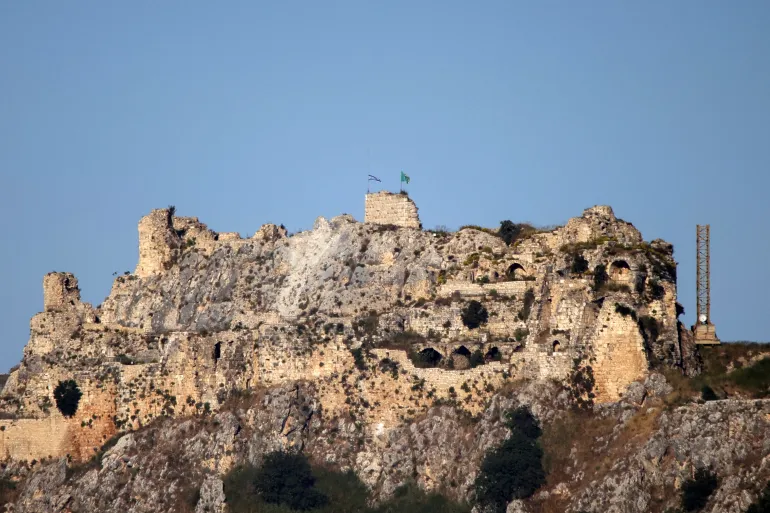
Israel Captures Beaufort Castle in Lebanon, Deepest Incursion in 26 Years as Hezbollah Talks Fracture
Israeli forces seized Beaufort Castle, a 12th-century Crusader fortress in southern Lebanon, on May 31, 2026, marking Israel's deepest military penetration into Lebanese territory since its withdrawal in 2000. Israeli troops have crossed the Litani River — the boundary established by UN Security Council Resolution 1701 after the 2006 war — and are now positioned roughly five kilometers from Nabatieh, the largest city in southern Lebanon. A ceasefire agreed on April 17, 2026 remains nominally in effect but has been violated by both sides throughout, and its precise terms have not been made public, making definitive legal judgments about these operations impossible. The advance has displaced over 1.2 million Lebanese and drawn urgent condemnation from France, Germany, and the United Kingdom; France requested an emergency UN Security Council meeting within hours of the capture. The operation's scale, combined with Israeli officials' statements about maintaining a permanent security zone, suggests this may represent a structural shift in the Israel-Lebanon security relationship — not a temporary tactical move — with direct implications for ongoing U.S.-brokered diplomatic talks scheduled for June 2–3 in Washington.
The capture of Beaufort Castle represents Israel's deepest military penetration into Lebanon since its 2000 withdrawal and signals the potential collapse of the post-2006 security architecture governed by UN Security Council Resolution 1701. Israeli forces crossing the Litani River — the boundary UNSCR 1701 designated as the limit for armed groups in southern Lebanon — indicates Israel has abandoned that framework. The operation's scale and Israeli officials' statements about permanent occupation suggest this may represent a structural shift in the Israel-Lebanon security relationship rather than a temporary tactical operation.
The facts, with receipts.
Israeli forces captured Beaufort Castle in southern Lebanon on May 31, 2026, marking the country's deepest military incursion into Lebanese territory in more than 25 years.NPR
Israeli forces have crossed the Litani River, the boundary designated by UN Security Council Resolution 1701 as the limit for armed groups in southern Lebanon.Al Jazeera
A ceasefire between Israel and Hezbollah has been in place since April 17, 2026, though fighting has continued on both sides throughout the period.Sky News
France requested an emergency meeting of the UN Security Council in response to the Israeli advance.CBC News
In 2024, UNESCO granted enhanced protection status to 34 Lebanese cultural sites, including Beaufort Castle, affording them special legal protections against military use and attack.CBC News
Israel previously occupied Beaufort Castle from 1982 until its withdrawal from Lebanon in 2000.Le Monde
Prime Minister Benjamin Netanyahu characterized the Beaufort capture as a dramatic shift in Israel's Lebanon offensive and ordered forces to deepen and expand control over areas previously held by Hezbollah.Le Monde
The current Israel-Hezbollah war began on March 2, 2026, when Hezbollah fired rockets into northern Israel two days after the U.S. and Israel attacked Iran.Sky News
The full briefing.
Israeli forces raised the national flag over Beaufort Castle on May 31, 2026, completing the seizure of a medieval Crusader fortress that Israel held for 18 years before abandoning it in 2000. The capture marks the deepest Israeli military penetration into Lebanese territory since that withdrawal — a threshold that carries both tactical and symbolic weight, and that has triggered an urgent round of international condemnation even as U.S.-mediated diplomatic talks continue in parallel.
Beaufort Castle sits atop a ridge approximately 14.5 kilometers from the Israeli border, commanding a wide view across southern Lebanon and northern Israel. Israeli troops from the Golani Brigade raised both the national flag and the brigade's own flag over the ruins. Defence Minister Israel Katz announced the capture and stated that Israeli forces would remain at Beaufort as part of a security zone in Lebanon — language indicating permanent presence, not a temporary forward position. Netanyahu called it a dramatic shift in the Lebanon offensive and ordered forces to deepen and expand control over areas previously held by Hezbollah. Finance Minister Bezalel Smotrich framed the capture as correcting old national sins and called for permanent occupation; National Security Minister Itamar Ben-Gvir separately pressed Netanyahu to target Beirut.
Israeli forces occupy approximately 2,000 square kilometers of Lebanese territory — nearly one-fifth of the country — with over 1.2 million Lebanese displaced. A nominal ceasefire agreed on April 17, 2026 remains technically in effect but has been consistently violated by both sides. International diplomatic efforts led by the United States are ongoing in Washington, with France requesting an emergency UN Security Council meeting in response to the Israeli advance.
The operation has carried Israeli forces past the Litani River — the boundary that UN Security Council Resolution 1701, passed after the 2006 Israel-Hezbollah war, designated as the limit for armed groups in southern Lebanon. Israeli troops are now positioned roughly five kilometers from Nabatieh, the largest city in the south and the principal political center of Lebanon's Shia community. Evacuation orders cover all areas south of the Zahrani River, which runs approximately 40 kilometers north of the Israeli border, placing Nabatieh within the evacuation zone. Israeli forces now control approximately 2,000 square kilometers of Lebanese territory — close to one-fifth of the country — with more than 1.2 million people displaced. A ceasefire agreed on April 17, 2026 remains nominally in effect, extended by 45 days on May 15, but commanders on the ground from both sides describe it as non-functional. The precise terms of that ceasefire have not been made public, which means whether these specific operations constitute technical violations cannot be definitively established.
Hezbollah has continued launching attacks throughout the period. The Israeli military recorded nearly 200 alerts in a single 24-hour window covering drones and missiles across northern Israel. One key development is Hezbollah's deployment of fiber-optic drones — guided by cables the width of dental floss — which cannot be jammed or detected electronically, and which killed an Israeli soldier on May 30. A source affiliated with Hezbollah indicated the organization intends to broaden the geographic range of its attacks in proportion to Israel's advance. No official statement from Hezbollah's leadership regarding the Beaufort loss has been issued. Hezbollah's current leadership structure following the killing of Secretary-General Hassan Nasrallah in September 2024 remains substantially unclear, and who is making strategic decisions — and what their risk tolerance is — is an unresolved question that directly affects how this conflict could escalate or resolve.
The public framing of the operation breaks along familiar lines, but with a notable internal fracture. Israeli government officials and pro-Israel commentators have emphasized strategic military achievement, historical resonance — the Golani Brigade returning to a position where Israeli soldiers fell 44 years ago — and the security imperative of preventing Hezbollah from threatening northern Israeli communities. Lebanese, European, and Arab voices emphasize the crossing of the Litani as an abandonment of the international legal framework, the scale of Lebanese displacement and casualties, and the timing — an advance during a nominal ceasefire and concurrent diplomatic talks. A smaller but significant strand in Israeli media, led by Haaretz reporting, documents a different story: senior IDF officers expressing frustration with the government over lack of transparency about diplomatic progress and concern about the risks of withdrawing from deep Lebanese territory if talks produce an abrupt ceasefire — what one account describes as a withdrawal under fire. This internal critique has not gained traction in broader public discourse.
The backdrop to all of this is a conflict architecture decades in the making. Israel withdrew from Lebanon in 2000 expecting that withdrawal would end the rationale for Hezbollah's armed presence south of the Litani. Instead, Hezbollah used the following two decades to build an arsenal estimated at over 100,000 projectiles and embed military infrastructure throughout southern Lebanon, effectively making UNSCR 1701's prohibition unenforceable. The 2006 war ended in a ceasefire widely perceived in Israel as a strategic failure: Hezbollah survived, declared victory, and rebuilt. Every subsequent ceasefire has produced the same result in Israeli strategic memory — Hezbollah re-emerging stronger. The October 7, 2023 Hamas attack, and Hezbollah's subsequent sustained fire into northern Israel that displaced an estimated 60,000 to 80,000 Israelis from border communities, gave that historical frustration acute political urgency.
What happens next is genuinely open. Lebanese and Israeli military officials held their first direct talks in decades at the Pentagon on May 29; the next round is scheduled for June 2–3 at the U.S. State Department in Washington. Secretary of State Marco Rubio has proposed a framework in which Hezbollah halts all attacks and Israel refrains from escalating operations in Beirut. A senior Arab official involved in mediation indicated that American and Iranian negotiators have already reached an agreement in Doha but that both sides are deliberately delaying — creating a diplomatic standoff whose resolution would directly affect the Lebanon track. Lebanese Parliament Speaker Nabih Berri stated he can guarantee Hezbollah's full and immediate commitment to a ceasefire, while asking who will compel Israel to stop. France's emergency UN Security Council meeting request faces a practical ceiling: the United States holds veto power. Israel has stated forces will remain in southern Lebanon as part of a permanent security zone, but has not publicly defined the northern boundary of that zone. Whether the June 2–3 talks produce a framework before Israeli forces reach Nabatieh is the central question this story leaves unresolved.
The numbers that matter.
The same facts.
Different stories.
Legitimate Security Operation
High reachHezbollah's sustained rocket and drone attacks on northern Israel (200 alerts in 24 hours), fiber-optic drone technology that evades Israeli defenses, Israeli casualties (27 dead), Beaufort's commanding position over southern Lebanon, Netanyahu's statement about returning stronger than ever, Katz's framing of crushing Hezbollah's power, 44th anniversary of 1982 battle
Nominal ceasefire in effect since April 17, massive disparity in casualties (3,350+ Lebanese vs 27 Israeli), crossing of Litani River in violation of UNSCR 1701, 1.2 million Lebanese displaced, UNESCO protection status of Beaufort Castle, international condemnation from France/Germany/UK, IDF internal concerns about operational risks
Ceasefire Violation and Territorial Expansion
High reachCeasefire technically in effect since April 17, Israeli forces now occupying one-fifth of Lebanon (2,000 sq km), crossing of Litani River, 1.2 million displaced Lebanese, 3,350+ Lebanese deaths vs 27 Israeli deaths, Israeli evacuation orders extending to Zahrani River, Netanyahu's directive to deepen and expand grip, Katz's statement troops will remain as part of security zone, Smotrich's call for permanent occupation, French/German/UK condemnation, UNESCO protection violation
Hezbollah's March 2 initiation of rocket campaign, sustained Hezbollah attacks throughout nominal ceasefire period, Hezbollah's violation of UNSCR 1701 by maintaining infrastructure south of Litani for 20 years, Israeli security rationale for preventing return of Hezbollah to positions threatening northern Israel, fiber-optic drone threat
Historical Restoration and Symbolic Victory
Medium reach44th anniversary of 1982 battle, Golani Brigade flag raised, Netanyahu's statement about returning stronger than ever, Smotrich's framing of correcting old national sins, historical significance of Beaufort as site of Israeli sacrifice and withdrawal, Crusader-era origins, commanding views of region, Katz's commemoration of soldiers who fell in 1982
Current military significance vs symbolic value, whether Hezbollah heavily fortified the position, tactical necessity of the capture vs political timing, IDF internal concerns about operational overreach, humanitarian impact of the broader campaign, whether permanent occupation is militarily sustainable
Escalatory Risk and Diplomatic Collapse
Low reachDiplomatic talks ongoing in Washington (scheduled June 2-3), senior Arab official stating U.S.-Iran deal already closed in Doha but delayed, IDF officers expressing concern about withdrawal under fire scenario, 146th Division withdrawal reducing border forces, French emergency UN meeting request, approach to Nabatieh threatening major Shia population center, Hezbollah source indicating deeper advances will trigger broader attacks, UNIFIL presence in operational area
Israeli security rationale for operations, Hezbollah's sustained attacks justifying Israeli response, public Israeli support for the operation, Trump's reported support for Israeli freedom of action, Netanyahu's characterization as dramatic shift rather than overreach
What the signal looked like.
Israeli Strategic Victory
IDF capture of Beaufort Castle marks major advance against Hezbollah, deepest incursion in 26 years, securing strategic ridge overlooking Litani River.
Israeli Aggression and Escalation
Unjustified incursion beyond Litani River violating April 2026 ceasefire, expanding occupation despite diplomatic efforts.
Historical/Symbolic Return
Recapturing Crusader-era fortress previously held by Israel until 2000, raising flags again on symbolic site from 1982 war.
International Condemnation and Diplomacy
Escalation undermines peace talks; calls for restraint from US, Europe, UN emergency meeting.
Google Trends data shows search interest for 'Beaufort Castle in Lebanon' spiked from zero to peak (100) on June 1, 2026, with initial emergence on May 28 and major surge starting afternoon of May 31. Search interest for 'Israeli' showed elevated baseline (37-60 range) from May 25-30, then surged to peak (100) on May 31 during the Beaufort capture announcement. Both terms show coordinated spike pattern indicating the story broke into mainstream consciousness on May 31 afternoon UTC.
No relevant prediction markets found on Polymarket for Israel-Lebanon ceasefire or related outcomes.
The thread, in order.
Israeli forces first captured Beaufort Castle during Operation Peace for Galilee, the First Lebanon War.
Established Israeli control of the strategic position and created the historical reference point for the 2026 recapture.
Israeli forces withdrew from Lebanon, including from Beaufort Castle, ending 18 years of occupation.
The withdrawal from Beaufort was one of the most symbolically charged moments of Israel's retreat from Lebanon. Hezbollah inherited control and portrayed it as a resistance victory.
Israel-Hezbollah war ended with UN Security Council Resolution 1701, establishing the Litani River as boundary for armed groups in southern Lebanon.
Created the international legal framework that Israel's current operations have abandoned by crossing the Litani.
Hamas attack on Israel; Hezbollah subsequently opened support front with sustained fire into northern Israel.
Set in motion the escalatory sequence that led to full-scale Israel-Hezbollah war in 2026.
Israeli forces killed Hezbollah Secretary-General Hassan Nasrallah.
Removed Hezbollah's most important strategic and ideological leader, creating organizational disruption whose effects are still playing out.
UNESCO granted enhanced protection status to 34 Lebanese cultural sites including Beaufort Castle.
Established legal protections against military use and attack that Israel's capture appears to violate.
U.S. and Israel attacked Iran.
Triggered Hezbollah's March 2 rocket campaign into northern Israel as solidarity action.
Hezbollah fired rockets into northern Israel, beginning the current Israel-Hezbollah war.
Marked the transition from contained support front to full-scale warfare.
Ceasefire agreement took effect between Israel and Hezbollah.
Created the nominal ceasefire framework that remains technically in effect but has been consistently violated by both sides.
Ceasefire extended by 45 days.
Indicates diplomatic efforts continued even as fighting persisted.
Lebanese and Israeli military officials held their first direct talks in decades at the Pentagon.
Represents unprecedented direct communication and suggests U.S. diplomatic pressure for resolution.
Israeli forces captured Beaufort Castle and raised Israeli flag over the site.
The central event of this Story, marking Israel's deepest incursion into Lebanon in 26 years and abandonment of the Litani River boundary.
The relationships driving it.
According to unnamed Israeli officials, Trump told Netanyahu he supported Israel's freedom of action against threats on all fronts including Lebanon. This provides Netanyahu with U.S. diplomatic cover for operations that previous administrations might have constrained more actively.
Iranian officials stated that Israeli withdrawal from southern Lebanon is a prerequisite for progress in U.S.-Iran nuclear negotiations, placing Hezbollah at the intersection of two concurrent diplomatic processes. The relationship between Hezbollah's military decisions and current Iranian strategic guidance is not established in reporting but is likely significant.
Full-scale warfare since March 2, 2026. Israel has killed an estimated 3,000 Hezbollah fighters (per Netanyahu) and captured Beaufort Castle. Hezbollah continues launching attacks including fiber-optic drones that evade Israeli defenses. No official Hezbollah response to the Beaufort loss has been issued.
France requested emergency UN Security Council meeting in response to Beaufort capture. Foreign Minister Barrot condemned Israeli operations as unjustifiable. French President Macron stated nothing justifies the escalation. Israel has effectively superseded the UNSCR 1701 framework that France architected, and French UNIFIL troops are in the operational area.
Berri stated he can guarantee Hezbollah's full ceasefire commitment, suggesting he maintains communication channels with Hezbollah's current leadership. This positions him as a potential diplomatic intermediary.
Smotrich characterized Beaufort capture as correcting old national sins and called for permanent occupation. This represents far-right coalition pressure on Netanyahu for maximalist positions. Whether Netanyahu shares this view or manages it as coalition politics is unclear.
Rubio spoke to Lebanese President Joseph Aoun (and Netanyahu) to propose ceasefire framework. Next round of talks scheduled for June 2-3 at State Department. Rubio is serving as active diplomatic intermediary between Israel and Lebanon.
Israeli forces crossed the Litani during current operation, explicitly abandoning the UNSCR 1701 framework. This crossing represents a fundamental shift in Israel's acceptance of international legal constraints on its operations in Lebanon.
What no one is covering.
Details of the April 17 ceasefire agreement and its terms — what each side committed to, what enforcement mechanisms existed, what violations would constitute breach
Independent verification of casualty figures from either Lebanese or Israeli governmental sources
Hezbollah's organizational response and strategic assessment of losing Beaufort — complete absence of official Hezbollah statement or leadership perspective
Civilian impact in newly occupied areas — lived experience of populations in Nabatieh area, conditions for those unable to evacuate, where displaced populations are going
Legal analysis of territorial occupation under international law — whether crossing Litani violates UNSCR provisions, what UNESCO enhanced protection requires, IHL framework for occupation
Operational details of the Beaufort battle — how heavily fortified it was, what Hezbollah's defensive posture looked like, what actual military value the position holds beyond symbolic weight
What we don't know.
Intelligence means marking the edges of what's verified. Here's what this story can't yet answer.
The actual terms and enforcement mechanisms of the April 17, 2026 ceasefire agreement are not established in any source. This makes it impossible to assess definitively whether Israeli operations constitute technical violations versus operations that fall outside the ceasefire's scope.
Hezbollah's current leadership structure following Hassan Nasrallah's killing in September 2024 is substantially unclear. Who is making strategic decisions, what their risk tolerance is, and how they assess organizational capacity are unknowns affecting conflict trajectory predictions.
The degree to which the Beaufort advance reflects a coherent long-term strategic plan versus responsive escalation with political overlay is uncertain. IDF internal tensions documented by Haaretz suggest military leadership has concerns, but whether this represents genuine strategic disagreement or manageable friction is unclear.
Independent verification of casualty figures from both Lebanese (3,350-3,371 deaths per Lebanese Health Ministry) and Israeli (27 deaths per Netanyahu's office) governmental sources is absent. The 100-to-1 ratio is stark but unverified by independent monitors.
The actual state of Nabatieh's civilian population — whether substantial populations remain or have been evacuated by Israeli orders — is not established. This affects humanitarian assessment and practical constraints on any Israeli advance into the city.
Israel's intended northern boundary for its security zone is not publicly defined. The Zahrani River has been mentioned in evacuation orders but no official has stated it as the intended permanent limit.
The precise content of Trump-Netanyahu communications about freedom of action — what was explicitly authorized versus what Netanyahu is inferring from general U.S. support — relies on single-side sourcing from unnamed Israeli officials with no U.S. confirmation.
Whether France has communicated directly with the United States about red lines regarding UNIFIL safety, and whether any such communication has produced private commitments from Israel about avoiding UNIFIL positions, is not established.
Who's telling you this.
Left of center.
Mean lean −0.9 across the 18 outlets synthesized.
Scores based on editorial-positioning data. Not an endorsement or criticism.
The story, visualized.
Glossary.
- UN Security Council Resolution 1701
- A 2006 UN resolution passed after the Israel-Hezbollah war that called for a zone free of armed groups south of the Litani River in Lebanon, to be monitored by Lebanese Armed Forces and UNIFIL. Israel's crossing of the Litani River in the current operation represents the abandonment of this framework.
- Litani River
- Southern Lebanon's principal river, running roughly parallel to the Israeli border at a distance of approximately 30 kilometers. It has served for decades as the defining political-military boundary for Israeli operations in Lebanon and was the designated limit under UNSCR 1701.
- UNIFIL
- The UN Interim Force in Lebanon, a multinational peacekeeping force deployed in southern Lebanon since 1978 and expanded after the 2006 war. France is one of its largest troop contributors, with approximately 700 soldiers in the operational area affected by Israel's current advance.
- Golani Brigade
- An elite Israeli infantry brigade with a long history of operations in Lebanon, including the 1982 battle for Beaufort Castle. The brigade raised its flag over the castle alongside the Israeli national flag on May 31, 2026.
- fiber-optic drone
- An unmanned aerial vehicle guided by a thin fiber-optic cable rather than radio signals. Because it does not transmit wirelessly, it cannot be detected by radar or jammed by electronic countermeasures, making it particularly effective against Israeli defensive systems.
- security zone
- A buffer area of foreign territory that a military occupies to prevent attacks on its own territory. Israeli Defence Minister Katz used this term to describe the areas Israel intends to hold in southern Lebanon on a long-term basis.
- enhanced protection
- A designation under the 1999 Second Protocol to the Hague Convention, granted by UNESCO to cultural heritage sites of the highest significance. It provides special legal protections against military use and attack under international humanitarian law.
- Nabatieh
- The administrative capital of the Nabatieh Governorate in southern Lebanon, with a pre-war population of approximately 120,000. It is the principal political, economic, and social center of Lebanon's Shia community in the south, and Israeli forces are currently positioned roughly five kilometers from the city.