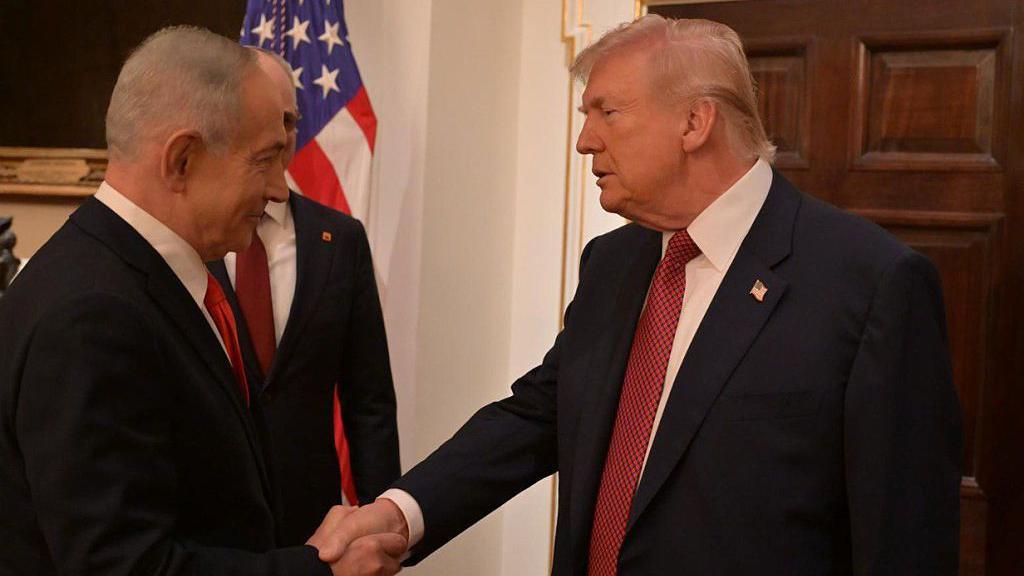
Trump Issues Iran Ultimatum as Netanyahu Escalates Lebanon Campaign — Deal Framework Emerges
The United States and Iran are in advanced but unfinished negotiations to end the 2026 Iran war, with President Trump warning on May 17 that 'the clock is ticking' and threatening devastating military strikes if Iran does not surrender or destroy its enriched uranium stockpile. On May 25, Israeli Prime Minister Netanyahu ordered an intensification of military operations against Hezbollah in Lebanon, striking more than 70 sites in a single day and vowing to 'crush' the group, even as the outline of a potential 60-day ceasefire-and-nuclear-talks framework became visible through diplomatic reporting. A deal has not been signed: Iran insists any agreement include a ceasefire in Lebanon, and the two sides remain deadlocked over whether the Strait of Hormuz reopens before or after Iran makes nuclear commitments. The outcome will determine whether the 2026 Iran war ends through diplomacy or expands into a full-scale U.S. military assault — and whether global oil markets, disrupted for months by the Strait's closure, can begin to recover. Approximately 1,500 ships carrying 20,000 seafarers remain stranded in the Persian Gulf, and industry analysts warn that even a signed deal would take weeks to restore normal shipping.
This story sits at the intersection of three overlapping crises — a potential U.S.-Iran nuclear agreement that could reshape Middle East order, an active and escalating war in Lebanon threatening to derail that agreement, and the unprecedented post-Khamenei Iranian leadership vacuum that creates both opportunity and instability in the negotiations. The outcome will determine whether the 2026 Iran war ends through diplomacy or expands into a full-scale U.S. military assault, whether global oil markets and the Strait of Hormuz reopen, and whether Hezbollah survives as an armed force in Lebanon — all with enormous downstream consequences for global energy prices, regional security architecture, and U.S. domestic politics.
The facts, with receipts.
Trump issued a public ultimatum to Iran on May 17 via Truth Social, warning that 'the clock is ticking' and that Iran would be 'hit much harder' if it failed to reach an acceptable deal.Axios
Netanyahu ordered Israeli forces to intensify operations against Hezbollah on May 25, vowing to 'crush' the group; Israeli aircraft struck more than 70 Hezbollah sites that day and evacuation orders were issued for ten Lebanese villages.BBC News
Israeli strikes in Lebanon since early March have killed more than 3,000 people according to Lebanese authorities, including more than 400 since the April 17 ceasefire.BBC News
A drone struck the UAE's Barakah nuclear power plant on May 17, damaging an electrical generator outside the facility's inner perimeter; the UAE confirmed no radioactive material was released.Axios
Israel and Hezbollah have exchanged fire on a near-daily basis despite the April 17 ceasefire between Lebanon and Israel.BBC News
Pakistan is serving as the official mediator between the United States and Iran.Axios
Lebanon and Israel are scheduled to hold negotiations in Washington on June 2–3, preceded by a Pentagon meeting of military officials on May 29.Channel NewsAsia
The United States and Iran agreed to a temporary truce on April 8, 2026, following the start of hostilities on February 28.Straits Times
The full briefing.
The most intense week of simultaneous diplomacy and military escalation in the 2026 Iran war reached a critical juncture on May 25, when Israeli Prime Minister Benjamin Netanyahu ordered a broad intensification of operations against Hezbollah in Lebanon — striking more than 70 sites in a single day — while Iran's foreign ministry said the two sides had resolved "a large portion" of issues in nuclear talks but that no agreement was imminent. The dual-track dynamic, a deal taking shape on paper while fighting accelerates on the ground, now defines the conflict.
On May 17, President Trump issued a stark public warning to Iran via Truth Social, writing that "the clock is ticking" and telling Axios directly that Iran would be "hit much harder" than before if it failed to produce an acceptable proposal. The same day, a drone struck the UAE's Barakah nuclear power plant, damaging an electrical generator outside the facility's inner perimeter; the UAE confirmed no radioactive material was released. Three drones had entered UAE airspace from the western border — two were intercepted, one hit the plant. Saudi Arabia also intercepted three separate drones that day from Iraqi airspace. The incidents added kinetic pressure to an already volatile negotiating environment, and Trump convened senior national security advisers, including Vice President JD Vance, White House envoy Steve Witkoff, Secretary of State Marco Rubio, and CIA Director John Ratcliffe, at his Virginia golf club that weekend.
As of May 25–29, 2026, Iran and the U.S. have reportedly reached agreement on 'a large portion' of issues in principle but have not signed any deal, with Iran insisting on a ceasefire in Lebanon as a condition and the U.S. resisting Iran's demand to sequence the Strait of Hormuz reopening before nuclear commitments. Israel is escalating military operations in Lebanon, striking more than 70 Hezbollah sites on May 25 alone and issuing evacuation orders for ten villages in southern Lebanon, while Hezbollah continues daily drone and rocket attacks on Israeli forces and territory.
The contours of a potential deal have become visible through diplomatic reporting. The emerging framework envisions a 60-day ceasefire in which the Strait of Hormuz would reopen simultaneously with the U.S. lifting its blockade of Iranian ports; Iran's enriched uranium stockpile would be destroyed in Iran or transferred, under international supervision; and billions in frozen Iranian assets would be subject to negotiation during the 60-day window. Iran has indicated it would suspend domestic enrichment for up to five years — far short of the 20 years the U.S. is seeking — and will not permit its uranium to be transferred to the U.S. or Russia. According to a single unnamed Iranian source, the U.S. has shown flexibility on allowing Iran to maintain limited peaceful nuclear activities under international oversight and has agreed to release one quarter of frozen assets on a phased schedule, though this claim has not been independently confirmed. Iran's new proposal reportedly prioritizes ending the war and reopening the strait, deferring the most contentious nuclear questions to later rounds. Iranian foreign ministry spokesman Esmaeil Baghaei said publicly that while much has been resolved, "no one can claim that signing of an agreement is imminent," citing "confusion in U.S. positions" and "Israeli interference" as obstacles. The governor of Iran's central bank traveled to Qatar on May 24 amid reporting from Doha that Qatari mediation had achieved a breakthrough on frozen assets — though no deal was announced during the coverage period. A critical unknown shadows every assessment of the talks: Iran's supreme leader, whose constitutional authority over foreign policy is absolute under the Islamic Republic's structure, has made no confirmed public appearance since taking office, and his actual decision-making capacity and relationship with Iran's military leadership are entirely unknown.
On May 25, Netanyahu ordered what he described as a campaign to "crush" Hezbollah, vowing to "smite them hip and thigh." Israeli aircraft struck more than 70 Hezbollah infrastructure sites across southern Lebanon and the Bekaa Valley. Residents fled the southern suburbs of Beirut after the announcement. Evacuation orders were issued for ten villages in southern Lebanon. Hezbollah responded with eight attacks, including a drone strike on Israeli troops in northern Israel. An Israeli soldier was killed on May 24, bringing the confirmed Israeli military death toll since hostilities began to 23, plus one civilian contractor. Lebanese authorities say Israeli strikes have killed more than 3,000 people since early March, including more than 400 since the April 17 ceasefire — figures that have not been independently verified by neutral monitors within the available reporting. Netanyahu's escalation order came under direct pressure from far-right coalition partners: Finance Minister Bezalel Smotrich called for retaliatory strikes on Beirut buildings and announced a 2-billion-shekel fund (roughly $692 million) for drone countermeasures; National Security Minister Itamar Ben Gvir called for cutting Lebanon's electricity and occupying Beirut's southern suburbs. Analysis in Der Spiegel noted that Smotrich's party is currently polling below the parliamentary threshold, suggesting Netanyahu's compliance with these demands reflected coalition survival calculations as much as military logic. The escalation is occurring as Lebanon and Israel prepare for Washington negotiations scheduled for June 2–3, preceded by a Pentagon meeting of military officials on May 29.
Media coverage of this story fractures sharply along geopolitical lines. Western commercial outlets have largely framed events as a race against Trump's deadline — Iran as the party that must act, the U.S. as the party setting terms. Outlets focused on diplomatic process treat Iranian negotiating positions as legitimate stances in a genuine mutual negotiation. A third cluster foregrounds the political drivers of Israeli escalation and the casualty disparity between Lebanese and Israeli deaths, while a smaller set of outlets characterizes the conflict as a struggle between regional actors and a more powerful military alliance. Social media signals for this story are entirely unavailable: all data queries for this story returned technical failures, and no verified information about how the public is engaging with these events online can be reported.
The war's origins matter for understanding where things stand. The current Israel-Hezbollah conflict began on March 2, when Hezbollah fired rockets into northern Israel — two days after U.S. and Israeli forces launched large-scale strikes on Iran on February 28. That sequence, present in fewer than a quarter of the news profiles reviewed, is essential context: Hezbollah entered the war as a response to the February 28 strikes, not as an independent aggressor. The causal trigger of those February 28 strikes — what intelligence, threat, or decision led the U.S. and Israel to act on that date — has not been explained in any available reporting, and the absence of that foundational context makes it impossible to assess how the war began or who bears responsibility for initiating it. What happened to Iran's supreme leadership in those strikes is itself contested in the news record, though historical context research treats it as confirmed by multiple sources from late February and early March 2026.
Where things go from here is genuinely uncertain. The June 2–3 Washington talks between Lebanon and Israel are the next scheduled diplomatic milestone, but they are set against a backdrop of daily military exchanges and a Netanyahu government openly pursuing military objectives that conflict with the terms any deal would require. Iran has not signed an agreement and has explicitly stated one is not imminent. The Strait of Hormuz remains closed; shipping industry executives estimate that even an orderly reopening would take 30 to 45 days to restore normal traffic flows, with one risk analyst projecting recovery to only 40 to 50 percent of capacity within the first month. The critical unknown remains whether Iran's leadership — operating without a publicly active supreme leader — has the authority and the will to finalize a deal that its negotiators appear to be approaching.
The numbers that matter.
The same facts.
Different stories.
The Ultimatum Frame
High reachTrump's 'clock is ticking' Truth Social post; the specific 'full, large scale assault of Iran, on a moment's notice' preparation order; Trump calling off Tuesday strikes as a conditional restraint; $4.51/gallon U.S. gasoline price as evidence of Iran-caused economic harm.
The causal chain in which U.S.-Israel struck Iran first on February 28; Iranian negotiating positions as legitimate diplomatic stances; Gulf allies' role in restraining Trump from striking; the extent of deal progress already achieved.
The Diplomacy-in-Progress Frame
Medium reachDeal framework details (60-day ceasefire, Strait reopening, uranium disposition, frozen assets); Iran's 'large portion of issues' concluded statement; Baghaei's specific objections ('confusion in U.S. positions,' 'Israeli interference'); Qatari mediation breakthrough on frozen assets; central bank governor in Qatar.
The military dimension and threat of force behind negotiations; the human cost of continued conflict and blockades; whether the deal addresses root causes or merely pauses hostilities; Trump's domestic political constraints as a barrier to delivering on commitments.
The Israeli Escalation and Far-Right Pressure Frame
Medium reachSmotrich's 'ten buildings for every drone' statement; Ben Gvir's calls to conquer the Dahiyeh and cut Lebanon's electricity; Der Spiegel analysis that Smotrich's party polls below the parliamentary threshold; 3,000+ Lebanese killed vs. 24 Israelis; phosphorus munitions allegation; residents fleeing Beirut suburbs.
Israeli security justifications for strikes; operational details of Hezbollah threats to Israeli civilians; the ceasefire terms and which side violated them first; Hezbollah's role in initiating or sustaining conflict through its own attacks; Lebanese civilian opposition to Hezbollah.
The Resistance and Counter-Hegemony Frame
Low reachHistorical parallel to 2000 Lebanese Liberation Day; characterization of Iran and Hezbollah as having 'twice forced their far more powerful adversaries to accept a ceasefire'; Gulf allies restraining Trump from striking; Pezeshkian's 'dialogue does not mean surrender' framing.
Hezbollah's role in initiating or sustaining conflict; the human cost of Hezbollah's strategy on Lebanese civilians; internal Lebanese opposition to Hezbollah's military role; Iranian authoritarianism; Hezbollah's designation as a terrorist organization by multiple countries.
What the signal looked like.
No data available — all trend queries returned rate-limit errors at time of synthesis.
No data available.
The thread, in order.
Trump withdraws the U.S. from the 2015 JCPOA nuclear agreement, calling it 'a giant fiction,' and launches maximum pressure sanctions campaign against Iran.
Structural antecedent: the collapse of the JCPOA removed the diplomatic framework constraining Iran's nuclear program and set Iran on a path of escalating enrichment that ultimately led to the 2026 war.
Trump orders assassination of IRGC Quds Force commander Qasem Soleimani; Iran fires ballistic missiles at U.S. bases in Iraq in retaliation; both sides step back from open war.
Prior escalation precedent: established the pattern in which Trump uses targeted killing as coercive tool and Iran responds with controlled escalation before pulling back.
Israel kills Hezbollah Secretary-General Hassan Nasrallah in an airstrike, the most significant blow to Hezbollah's leadership in the organization's history. Naim Qassem assumes leadership.
Weakened Hezbollah leadership going into the 2026 war; Qassem's assumption of leadership created an organization in transition when the current conflict began.
A ceasefire between Israel and Hezbollah is announced, broadly seen as a tactical pause rather than a resolution.
Immediate pre-war context: the 2024 ceasefire set structural conditions for the 2026 resumption — neither side achieved its objectives, Hezbollah retained its military capacity, and Israel retained ambitions to eliminate it.
Trump returns to office as 47th President of the United States, with a hawkish national security team and a stated intention to resolve the Iran nuclear issue definitively.
The precondition for the 2026 war: the combination of a Trump administration willing to use force with a Netanyahu government seeking to eliminate Hezbollah created the political conditions for the February 2026 strikes.
The United States and Israel launch large-scale strikes on Iran, including an airstrike that kills Supreme Leader Ali Khamenei at his office in Tehran. This marks the start of the 2026 Iran war.
The foundational event of this entire Story: the war, the negotiations, the Hezbollah front, the Strait closure, and the succession crisis all flow from this date.
Hezbollah fires rockets into northern Israel two days after the U.S. and Israel began attacks on Iran, beginning the 2026 Israel-Hezbollah war.
Establishes the causal sequence: Hezbollah's entry into the conflict was a response to the February 28 strikes on Iran, not an independent initiation of hostilities — a framing present in a minority of news coverage.
Further Israeli and U.S. bombing destroys the Iranian Assembly of Experts' building in Qom, raising questions about whether all 88 members of the body responsible for selecting a new supreme leader were alive.
Compounds the succession crisis created by Khamenei's death, raising questions about the legitimacy of Mojtaba Khamenei's appointment.
Trump posts on Truth Social: 'There will be no deal with Iran except UNCONDITIONAL SURRENDER!'
Establishes the maximalist starting position from which Trump later moderated; contextualizes subsequent deal-making as a significant departure from his initial public posture.
The United States and Iran agree to a temporary truce.
First diplomatic breakthrough after six weeks of open war; created the framework within which subsequent ceasefire and nuclear negotiations operate.
A ceasefire between Israel and Lebanon comes into effect. Hours later, Israel launches its largest airstrikes of the war, killing more than 350 people. Netanyahu asserts the ceasefire does not apply to Lebanon.
Creates the structurally unstable 'ceasefire' that characterizes the Lebanon front: nominal cessation of hostilities accepted by Lebanon, Iran, and Hezbollah but explicitly rejected by Israel, generating the continuing cycle of attacks.
Trump issues 'clock is ticking' ultimatum to Iran via Truth Social. A drone strikes the UAE's Barakah nuclear power plant damaging an electrical generator (no radiation release). Saudi Arabia intercepts three drones from Iraqi airspace.
The triggering events of the current reporting period: Trump's public ultimatum escalates rhetorical pressure while regional drone strikes demonstrate the breadth of instability.
Trump contacts leaders of Saudi Arabia, Qatar, Pakistan, Turkey, Egypt, and Jordan demanding they join the Abraham Accords as part of an Iran deal. Pakistan immediately rejects the linkage.
Reveals Trump's attempt to bundle the Iran deal with broader regional normalization; Pakistan's rejection signals the limits of U.S. leverage over its own mediator.
Governor of Iran's central bank travels to Qatar. An Israeli soldier is killed in southern Lebanon, the 23rd Israeli soldier killed since hostilities with Hezbollah began. Hezbollah leader Qassem reiterates opposition to direct Israel-Lebanon negotiations and refuses to disarm.
The financial diplomacy track (central bank governor in Qatar) and the military track (soldier killed, Qassem refuses to disarm) are simultaneously advancing, illustrating the dual-track nature of the crisis.
Netanyahu orders intensification of operations against Hezbollah, vowing to 'crush' them. Israeli forces strike more than 70 Hezbollah sites including in Bekaa Valley and southern Lebanon. Evacuation orders issued for 10 Lebanese villages. Hezbollah carries out eight attacks including a drone strike on Israeli troops in Misgav Am. Smotrich announces 2-billion-shekel drone countermeasure budget. Iran's foreign ministry states 'a large portion of issues' are concluded but 'no one can claim signing of an agreement is imminent.'
The central day of the current reporting period: maximum military escalation by Israel concurrent with the closest the negotiations have come to a deal, illustrating the race between the military and diplomatic tracks.
The relationships driving it.
Showing strain: Trump prefers 'surgical' military action in Lebanon while Netanyahu ordered full escalation on May 25. Israel has privately characterized the emerging Iran deal as failing to address Israeli security concerns. Netanyahu has asserted Israel will 'maintain freedom of action' regardless of U.S. preferences on Lebanon.
Grudging negotiation: both sides are engaged in proximity talks through Pakistani and Omani mediators, have agreed to a temporary truce (April 8), and are negotiating a 60-day MOU framework — but the relationship remains fundamentally coercive with Trump maintaining a naval blockade while threatening additional military strikes.
Active military confrontation: Netanyahu ordered escalation on May 25 with the stated goal of 'crushing' Hezbollah; Hezbollah is responding with fiber-optic drone attacks that evade Israeli jamming. Netanyahu's escalation is occurring just as a U.S.-Iran deal that would require ending the Lebanon war appears imminent.
Strained by divergent interests: Iran is negotiating a deal that may trade away Hezbollah's military role in Lebanon, while Hezbollah is continuing attacks partly to demonstrate it cannot be negotiated away without its participation. The post-Khamenei leadership vacuum means the nature of current Iran-to-Hezbollah guidance is unknown.
Complicated mediating relationship: Pakistan is serving as the official U.S.-Iran mediator but has rejected Trump's Abraham Accords linkage demand, publicly opposed Israeli military action in Lebanon, and stated that Pakistan is 'under no compulsion' to accept U.S. conditions. The mediator is pushing back against its principal.
Nominally ceasefire, operationally hostile: Lebanon accepted the April 17 ceasefire; Israel conducts daily strikes; Netanyahu's May 25 escalation order intensified operations across Lebanese territory while Lebanon and Israel are simultaneously preparing for Washington negotiations on June 2–3.
Newly adversarial: the Lebanese government has publicly condemned Hezbollah's strikes, moved to ban Hezbollah's military activities, and called on it to place weapons under government control — an unprecedented move. Qassem has rejected disarmament. This is the sharpest open rupture between Hezbollah and the Lebanese state in recent history.
What no one is covering.
What sparked the U.S.-Israel strikes on Iran in late February 2026: no profile explains what event, threat, or intelligence led to the February 28 strikes. The absence of this foundational context makes it impossible to assess whether the strikes were preventive, retaliatory, or preemptive, and who bears responsibility for initiating the conflict.
The actual scope and nature of ongoing direct U.S.-Iran military engagement: profiles reference 'the war' and a U.S. naval blockade, but provide no detail on whether U.S. and Iranian forces have engaged in direct combat beyond the initial February 28 strikes, what the casualty count on both sides has been, or what a 'full, large scale assault' would represent as an escalation.
The substance of Iran's negotiating demands beyond general categories: Iranian demands are described in broad strokes (war's end, Strait reopening, frozen assets, ceasefire in Lebanon) but no profile details specific terms, quantities, timelines, or feasibility — making it impossible to assess whether Iranian positions are reasonable starting points or maximalist.
Lebanese civilian perspectives and the humanitarian situation on the ground: with 3,000+ killed and 1.2 million displaced, no Lebanese civilians are quoted or their experiences described beyond aggregate statistics. The human dimension is reduced to casualty counts.
Independent verification of military claims and casualty figures: no profile cites UNIFIL, Human Rights Watch, or other independent monitors — readers must rely entirely on partisan sources (Israeli military, Lebanese Health Ministry, anonymous U.S. officials) for casualty counts, strike targets, and ceasefire violation claims.
The Trump administration's internal decision-making and policy splits: despite references to 'confusion in U.S. positions,' no U.S. officials are quoted explaining policy formation or internal disagreements, leaving Trump's threat credibility and the seriousness of diplomatic efforts difficult to assess.
What we don't know.
Intelligence means marking the edges of what's verified. Here's what this story can't yet answer.
The death of Ayatollah Ali Khamenei in the February 28, 2026 strikes appears in only one of the 22 news profiles (BBC News) and is confirmed by the 3C historical context research (NPR, Al Jazeera, CNBC citations from late February/early March 2026). The 3A self-verification block flagged this as an extraordinary unconfirmed claim within the news profile set, though the 3C document treats it as confirmed. Stage 5 should note the sourcing discrepancy.
Mojtaba Khamenei's physical condition, decision-making capacity, and actual authority over the IRGC are unknown. Whether the IRGC has assumed effective supreme leader functions during his incapacitation is not reported in any available source. This is the most important structural unknown in the negotiations.
Pezeshkian's constitutional authority to conclude a deal without supreme leader sign-off is unclear given Mojtaba Khamenei's uncertain status. Whether he has IRGC backing for current negotiating positions is unknown and critically important for assessing whether any deal he signs will hold.
What triggered the February 28, 2026 U.S.-Israel strikes on Iran: no source in the 22-profile news set explains the immediate casus belli. This is essential context for evaluating legitimacy claims on all sides.
Hezbollah attack numbers since the April 17 ceasefire ('over a thousand drones and over 700 rockets') are attributed solely to an anonymous U.S. State Department official not authorized to speak to media. No independent source corroborates these figures within the available profile set.
Phosphorus munitions use by Israeli forces in Lebanon on May 25 (Qlailah municipality) is reported by Al Jazeera citing Lebanon's National News Agency but not confirmed by any other outlet in the 22-profile set.
Political outcry inside the U.S. over releasing up to $12 billion in frozen Iranian assets is reported by The Guardian citing Iranian officials' characterization — a second-hand perspective. No U.S. officials or Congressional sources directly confirm domestic opposition to asset releases as a structural constraint on deal completion.
All Stage 3B social signal data is absent: Google Trends queries returned rate-limit errors for all three primary terms. The social signals section of this Master Document contains no verified data.
The 22-profile news source set contains only four Tier 1 sources, and NHK's profile contains only headline and metadata with no usable article body. The modified anchoring standard applied in 3A ('1 Tier 1 + 3+ Tier 2 with Opinion ≤3') means anchored facts carry less evidentiary weight than they would under a strict '2+ Tier 1' standard.
The degree of genuine policy divergence versus coordinated 'good cop/bad cop' dynamic between Trump and Netanyahu on Lebanon operations is not confirmed by any available source.
Who's telling you this.
Left of center.
Mean lean −0.6 across the 40 outlets synthesized.
Scores based on editorial-positioning data. Not an endorsement or criticism.
Glossary.
- Strait of Hormuz
- A narrow waterway approximately 33 kilometers wide at its navigable point, separating the Persian Gulf from the Gulf of Oman. Before its current closure, roughly 20 percent of global oil exports and a third of globally traded liquefied natural gas passed through it daily.
- ceasefire
- A temporary halt to fighting agreed between opposing parties. In this conflict, the April 17, 2026 Lebanon-Israel ceasefire has been violated by ongoing exchanges of fire, and Israel's government has asserted the ceasefire does not apply to its operations in Lebanon.
- IAEA
- The International Atomic Energy Agency — a United Nations body that verifies countries' compliance with nuclear non-proliferation commitments by conducting independent inspections of nuclear facilities and materials.
- JCPOA
- The Joint Comprehensive Plan of Action, a 2015 agreement between Iran and six world powers that imposed strict limits on Iran's nuclear program in exchange for the lifting of international sanctions. The U.S. withdrew from it in 2018.
- IRGC
- Iran's Islamic Revolutionary Guard Corps — an elite military branch that controls much of Iran's missile and drone arsenal, oversees its regional proxy relationships including with Hezbollah, and operates with significant political and economic power inside Iran.
- Hezbollah
- A Lebanese Shia political party and armed movement founded in 1982 with Iranian support. It functions simultaneously as a social services provider, a political party with seats in Lebanon's parliament, and a military organization that the U.S., European Union, and others designate as a terrorist group.
- Abraham Accords
- Normalization agreements brokered by the U.S. in 2020 under which several Arab states — including the UAE, Bahrain, Morocco, and Sudan — established diplomatic relations with Israel. Trump sought in May 2026 to expand these accords to additional countries as part of any Iran deal.
- naval blockade
- A military action in which warships prevent vessels from entering or leaving a port or stretch of coastline. The U.S. has maintained a naval blockade of Iranian ports as part of its pressure campaign during the 2026 war.
- Assembly of Experts
- An 88-member Iranian clerical body with constitutional authority to appoint and remove the Supreme Leader. It appointed Mojtaba Khamenei as Iran's new supreme leader after Ali Khamenei's death — a process carried out under wartime conditions amid questions about whether all members were still alive.
- fiber-optic drone
- A type of drone that transmits flight control signals through a physical fiber-optic cable rather than radio waves, making it immune to electronic jamming systems that target radio-frequency communications. Hezbollah has deployed these against Israeli forces.